
Lead Generation
Stop Paying For Names You Could Already See
Every campaign you run adds a few names to a list, and every list starts decaying the day it lands in the CRM. LeadLander identifies the companies already reading your site right now — leads your traffic generated today, whether or not anyone filled out a form.
Start Your
14-Day Free Trial
"*" indicates required fields
Lead Generation
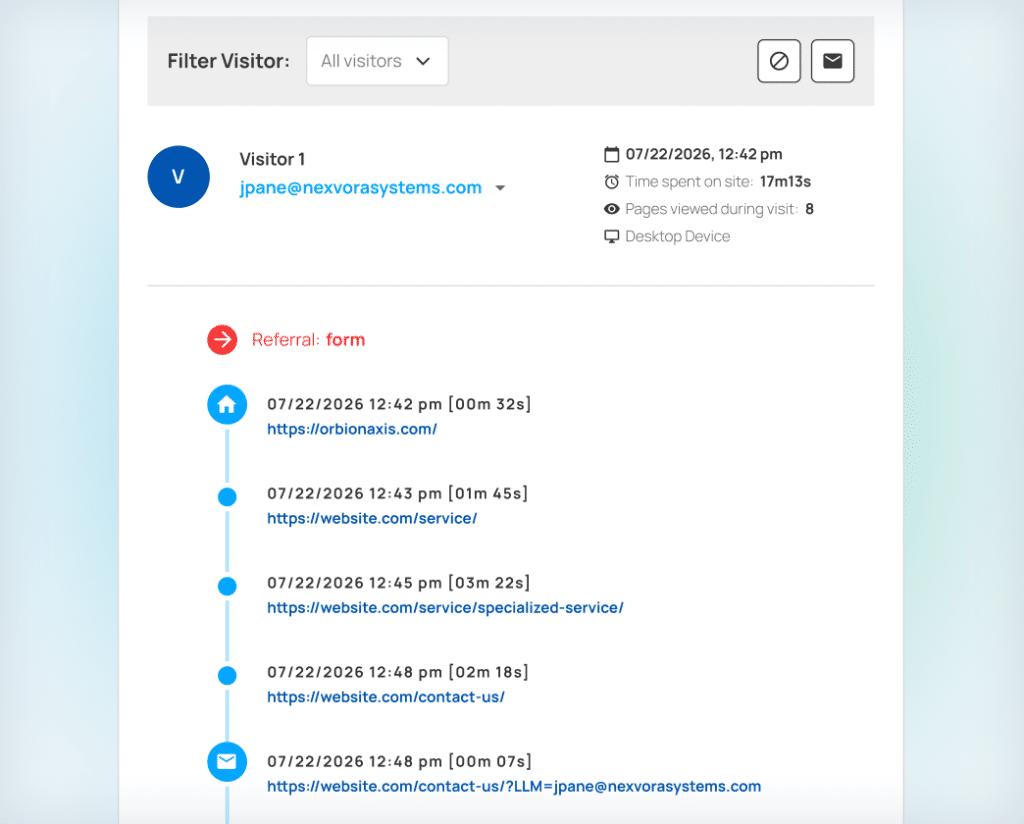
Most lead generation budgets are built around the same assumption: no form, no lead. That assumption throws away the majority of the people who show up. A rep working named accounts pulled from today’s traffic starts the week with more leads than a rep waiting on the next campaign to land.
With LeadLander, you can:
- Identify the companies visiting your site without a form fill
- See which pages each account read, and how often they came back
- Push verified contacts straight into the CRM your reps use
- Get alerted the moment a new account starts reading
The Core Query
What People Really Ask When They Search “Lead Generation”
You have a campaign calendar, a cost-per-lead number that keeps climbing, and a sales team that says half of what lands in the CRM was never worth calling. Somewhere in that mess is a simpler question: where are the leads that are already there, going uncounted?
The Short Definition
Lead generation is the work of turning strangers into people your sales team can reach — building interest, capturing contact information, and separating who is ready to talk from who is just looking. Most of that work still assumes a form: no form, no lead. Identification removes the assumption by naming the company behind a visit whether or not anyone filled anything out.
The phrase carries three different jobs. Capture is the demand generation marketer asking which channel and offer still produce a lead at a price worth paying — inbound lead generation, SEO for lead generation, or another paid push. Qualification is the SDR lead asking which of this month’s leads deserve a call today instead of another round of lead nurturing emails, and which ones lead qualification should already have screened out. Coverage is the VP of Marketing asking the harder question — how many buyers walked through the door this quarter and left without ever becoming a lead, because nobody asked them to fill out anything. Same words, three different Mondays.
So this page routes rather than pitches. Each sub-intent has its own library below, and each library goes a level deeper than this page can. Read the section that matches the job in front of you, then look for it in the library below. The product case is here too, but it is the last thing, not the first.
| Sub-Intent | What They’re Actually Asking | Who Is Asking | What They Need Next |
|---|---|---|---|
| Capture | “How do we get more leads without paying more per lead?” | Demand Generation Marketer, Growth Marketer | Channel mix, campaign structure, form and landing-page design, the lead generation metrics that actually predict pipeline |
| Qualification | “Which of these leads are actually worth a rep’s time?” | SDR/BDR Lead, RevOps Manager | MQL/SQL criteria, scoring model, routing rules, fit versus intent signals |
| Coverage | “What about everyone who never filled out a form at all?” | VP Marketing, Demand Generation Manager | Anonymous visitor identification, first-party intent data, the size of the gap |
Why It Matters
Most of Your Leads Never Fill Out a Form, So Most of Them Never Become Leads
Capture, qualification and coverage look like three problems. They are one: the funnel only counts the people who raise a hand, and the spend required to reach the next one keeps rising.
30%
of marketers still name generating leads a top marketing challenge, no better than a decade ago
83%
of B2B buyers narrow their shortlist to three vendors or fewer before sales ever gets a call
63%
of B2B marketing media spend now chases awareness and conversion, up more than ten points since 2024
90%
of B2B growth leaders report improved sales effectiveness, against barely half of everyone else
The money is moving in the right direction: Gartner puts 63% of B2B marketing media spend in awareness and conversion budgets for 2026 (Gartner, 2026), up more than ten points in two years. It is still chasing the same narrow definition of a lead — someone who filled out a form — which is why generating leads keeps landing on the list of top marketing challenges even as the budget behind it grows. That gap is exactly what LeadLander closes: it turns the traffic that budget already paid for into named leads, whether or not anyone ever fills out a form. More money aimed at the same handful of visitors willing to raise a hand does not create more leads. It creates a more expensive version of the same list.
Buyers are also moving faster than most funnels can register them. TrustRadius finds 83% of B2B buyers narrow their shortlist to three vendors or fewer (TrustRadius, 2026), usually before a form gets filled out at all. A funnel built to count form fills cannot see that shortlist taking shape — LeadLander can, because it identifies the accounts reading your site while they are still deciding, not after they have already chosen. The difference is not a better campaign. It is being visible early enough to still be on the list.
The cost of waiting for the form
Every guide on how to generate leads for free skips the same line item: you already have traffic. A campaign lead costs money before it exists — media spend, content, a landing page somebody may never fill out. An identified visitor is already on your site, reading, the moment your tracking script loads — for free. Most lead generation budgets are built entirely around the first kind and never account for the second.
Ready To Unlock The Power Of Website Visitor Tracking?
Generate leads from the companies already reading your site — starting with today’s traffic.
1,000+ Companies Use LeadLander














Our Advantage
Why Teams Pick LeadLander For Lead Generation
Lead Generation FAQ
Questions Marketers Ask Before They Trust a New Lead Source
If a lead is a company your sales team can act on, then yes — it just skips the step where somebody fills out a form. It sits alongside your campaigns rather than replacing them: campaigns still bring in people who are ready to raise a hand, and identification surfaces the much larger group who are not ready to raise one yet but are already reading your pricing page. Most teams run both, and most teams are only capturing the first.
Demand generation creates interest — content, ads, events aimed at people who are not shopping yet. Lead generation turns that interest into someone your sales team can reach. LeadLander sits in the second bucket: it does not create demand, it identifies the demand a campaign already created — the companies who showed up on your site and left without filling out a form.
Usually the leads are there and the tracking is not. Traffic arrives, reads a page or two, and leaves without triggering the one signal most sites are built to count: a form submission. That is not a traffic problem or an offer problem — it is a visibility problem, and it hides inside every report that only counts form fills as a lead. Identification names the traffic that was already there, which turns the question from why your site is not generating leads into which of the leads it is already generating you follow up with first.
Your Next Opportunity May Already Be Here
LeadLander helps you recognize more of the interest your business is already generating and turn that activity into something your team can use.
See who is visiting. Understand the opportunity. Take the next step with confidence.
Start Your Free Trial
"*" indicates required fields