
Understand Buyer Intent: See Who Is Deciding Before They Ever Raise A Hand
The accounts choosing a vendor this quarter are researching you right now, and almost none of them will fill out a form to do it. LeadLander names the companies reading your site, shows you what they read, and tells your reps which ones are actually moving.
Start Your
14-Day Free Trial
"*" indicates required fields
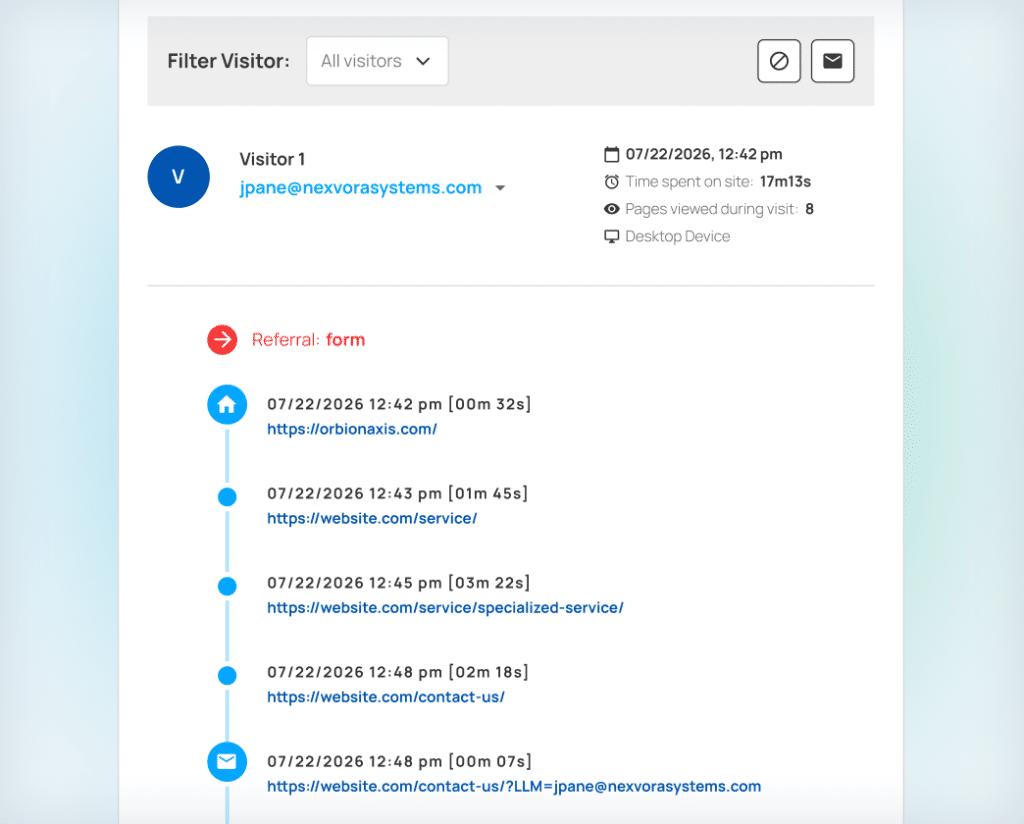
Buyer Intent & Journey Tracking
Intent is not a mood, and it is not one click. It is a pattern — the same account back a third time, deeper each visit, ending on pricing with two new people in tow. A rep who can see that pattern works a different list on Monday morning than a rep working alphabetically.
With LeadLander, you can:
- Identify the companies researching you before any form is filled out
- See which pages each account read, in what order, and how often they came back
- Push accounts, contacts and visit history into the CRM your reps already open
- Get alerted while the account is still reading, not the week after
The Core Query
What People Really Ask When They Search “Understand Buyer Intent”
You have traffic you cannot name, a CRM full of leads that went quiet, and a forecast built on whoever happened to fill out a form last month. Somewhere in that traffic are the four accounts that close this quarter.
The Short Definition
Buyer intent is the behavioral evidence that an account is moving toward a purchase — what it reads, which topics it researches, how many people get involved, and how recently. It is a pattern read across sessions rather than a single action, which is why one pricing-page view and a fourth visit in ten days mean entirely different things.
The phrase carries three jobs. Signals is the demand gen manager asking which behaviors actually count and which are noise. Sources is the RevOps lead asking where the data comes from — their own site, a review site, a third-party co-op — and which of those they need to buy. Activation is the sales manager asking what a rep does on Tuesday with a score that moved on Monday. Same query, three different meetings.
So this page routes rather than pitches. Each sub-intent has its own library below, and each library goes a level deeper than this page can. Read the section that matches the job in front of you, then follow the link. The product case is here too, but it comes last.
| Sub-Intent | What They’re Actually Asking | Who Is Asking | What They Need Next |
|---|---|---|---|
| Signals | “Which behaviors actually mean somebody is buying?” | Demand Generation Manager, Content Lead | Signal taxonomy, weighting by page and by role, how fast each signal decays |
| Sources | “Where does intent data come from, and which kind do we need?” | RevOps Lead, VP Marketing | First-party versus third-party comparison, match and coverage rates, lawful basis |
| Activation | “The score moved — what does a rep do with it today?” | Sales Manager, SDR Lead | Scoring thresholds, routing and alert rules, first-touch plays, pipeline attribution |
Why It Matters
By the Time a Buyer Agrees to Talk, Most of the Deciding Is Already Done
Signals, sources and activation look like three problems. They are one: the research that settles the deal happens somewhere you cannot see it, across more channels and more people than your CRM was built to hold.
67%
of B2B buyers say they would prefer a buying experience with no sales rep in it at all
73%
of buyers actively avoid suppliers whose outreach is irrelevant to what they are working on
10
channels the average business buyer now uses across a single purchase journey
45%
of buyers used generative AI on a recent purchase, mainly to gather information on vendors and products
The first two figures compound. Most buyers would rather not deal with a rep at all, and most will quietly drop a supplier who opens with the wrong thing. So the cost of a generic first touch is no longer a poor reply rate. It is exclusion — and it happens without anyone telling you it happened.
The research has also moved somewhere you cannot instrument. Buyers now work through vendors and products with an AI assistant long before any supplier hears about it, and they still carry what they find to a person: Gartner puts 69% of buyers at validating AI-generated insights with a sales rep (Gartner, 2026). The rep is not being cut out of the deal. The rep is arriving later, to someone who already holds a view — and the only place that person is visible before then is your own site.
The cost of reading it late
A form fill tells you an account has finished deciding it wants to talk. A third visit to your pricing page, from four people at the same company, tells you it is deciding right now. The first is a record. The second is a window — and it closes whether or not anyone on your team was watching.
Ready To Unlock The Power Of Website Visitor Tracking?
Understand buyer intent from the accounts already reading your site — starting with today’s traffic.
1,000+ Companies Use LeadLander













Our Advantage
Why Teams Pick LeadLander to Read Buyer Intent
Understand Buyer Intent FAQ
Questions Teams Ask Before They Commit to Intent Data
Lorem ipsum dolor sit amet consectetur. Quisque leo eu at donec. Enim massa ultricies elementum a pretium eget. Purus ac orci venenatis tincidunt mattis nullam augue id. Facilisi eget rhoncus magnis viverra.
Often yes, and for the opposite reason people expect. Low traffic means a small number of accounts carry your whole quarter, so missing one is expensive — and a few hundred sessions is a list a single rep can actually work by hand. What low traffic does rule out is a purely statistical approach: you will not have the volume to train a scoring model on your own data. Start with identification and page history, work the accounts individually, and add scoring when the sample justifies it.
Lead scoring grades the records you already hold: someone converted, and the model decides how good they look. Intent watches accounts you have no record of, which is where most of the buying group sits — the people upstairs from your one form fill. The two are complementary rather than competing, and the honest test is coverage: count how many of last quarter’s closed-won accounts had a scored lead in the CRM before the first sales conversation. Whatever the gap is, that is what intent is for.
Company-level identification from your own site sits on very different ground from buying personal records, and most teams run it under legitimate interest with a disclosed cookie policy. The questions to put to any vendor: what exactly is resolved, company or individual; where the underlying data comes from; whether processing is covered by a data processing agreement; and how an opt-out or deletion request is honored end to end. Get those in writing before the trial ends, and involve whoever owns privacy at your company rather than deciding it inside marketing.
Your Next Opportunity May Already Be Here
LeadLander helps you recognize more of the interest your business is already generating and turn that activity into something your team can use.
See who is visiting. Understand the opportunity. Take the next step with confidence.
Start Your Free Trial
"*" indicates required fields