
Prioritize Sales Opportunities
Work The Accounts That Are Actually Moving
Your open pipeline is bigger than your team’s week, and the list your reps start on Monday is usually sorted by close date or by whoever emailed last. LeadLander ranks it by evidence instead — which companies came back to your site, what they read, and how deep they went.
Start Your
14-Day Free Trial
"*" indicates required fields
Prioritize Sales Opportunities
Bad prioritization is quiet. No rep decides to work the wrong deal; they work the one with the most recent reply in it, while the account comparing you against two vendors reads your pricing page on a Thursday and never hears from anyone. The ranking was never wrong on purpose. It was just built out of opinion.
With LeadLander, you can:
- Identify the companies running an evaluation on your site right now
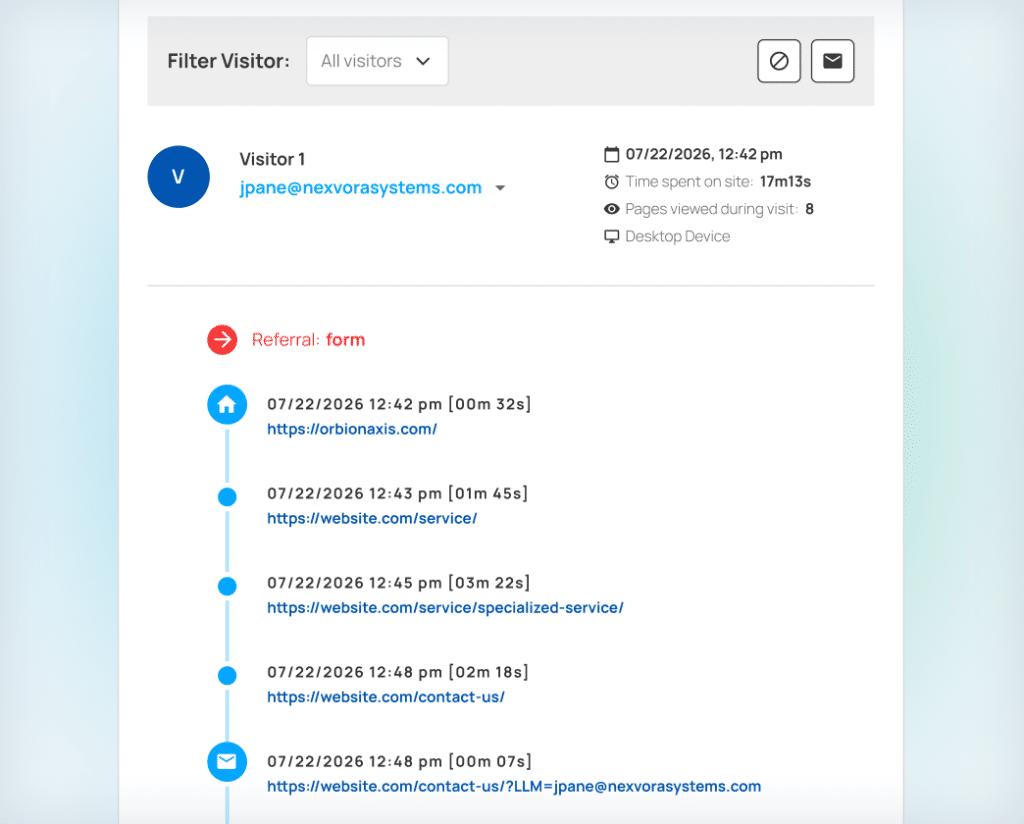
- See which pages each account read, in what order, and how often they returned
- Push accounts, contacts and visit history into the CRM your reps already open
- Get alerted the moment an account moves, not at the next pipeline review
The Core Query
What People Really Ask When They Search “Prioritize Sales Opportunities
You have more open opportunities than selling hours, a forecast that moves every week, and no defensible way to say which ten deals deserve the next five days. So the list gets sorted by close date, by deal size, or by whoever asked most recently.
The Short Definition
Prioritizing sales opportunities starts with lead qualification — separating the real deals from the hopeful ones — then ranks what is left by how likely each is to close, what it is worth, and how soon it will move, so your reps spend their finite hours from the top of that list down. The ranking is only as good as the evidence under it: fit tells you who should buy, and behavior tells you who is buying now.
Put that question to three people on the same revenue team and you get three answers. Your AE is still working out which of these are real deals — a good share of any pipeline is a forwarded email with an optimistic close date attached to it. Your RevOps lead hears a ranking problem, and wants a rule that lands an account in the same place no matter who is looking at it. The sales manager is not thinking that far ahead. They want to know what the team should open tomorrow at nine.
Qualification, scoring, triage. Each one needs something different, so the libraries below are split the same way and go deeper than a single page can. Start with whichever of the three names the argument you are having this week. The case for LeadLander sits at the end, after the part you came for.
| Sub-Intent | What They’re Actually Asking | Who Is Asking | What They Need Next |
|---|---|---|---|
| Qualification | “Which of these are even real deals?” | Account Executive, Sales manager | Qualification criteria, MEDDIC or BANT-style frameworks, disqualification rules, buying-group coverage |
| Scoring | “How do we rank them without arguing about it every week?” | RevOps Lead, Sales Operations | Fit, intent and engagement weighting, tiers, and thresholds, CRM fields, model validation |
| Triage | “What does a rep work first tomorrow morning?” | Sales Manager, SDR Lead | Routing rules, working cadence, stale-deal thresholds, a pipeline review agenda |
Why It Matters
The Deal Already Told You Where It Stood. Most Pipelines Never Heard It.
Qualification, scoring and triage all lean on the same assumption — that a deal’s real standing shows up somewhere in the CRM. Most of it shows up on your website first, before a call ever gets logged and often before anyone on your team knows the account is in-market at all.
95%
of B2B purchases go to a vendor already on the buyer’s Day One shortlist.
2/3
of the buyer’s journey is already behind them before they engage a seller at all
70%
is the return-on-investment lift lead scoring models can produce when they prioritize which prospects get worked first
71%
of buyers want to talk to a seller early in the process, while they are still considering new possibilities
Put the first two numbers together and the sequence gets uncomfortable. Two-thirds of the buying journey is already over, and the short list that decides the deal is effectively locked, before a seller typically gets a real conversation going. A pipeline sorted by call notes and close dates is describing a decision that already happened somewhere else. What it is missing is not effort — it is the account’s own record of getting there: the pages it read, how many times it came back, and who beyond your one known contact showed up.
That is exactly the gap a ranking is supposed to close, which is why teams that use lead scoring to prioritize their prospects can see a return-on-investment lift of up to 70% — a model can only rank what it can actually see. Seventy-one percent of buyers say they want a seller in the room early, while they are still weighing options and not after the short list is already set. LeadLander is what lets a ranking see that early — which company is reading your pricing page, how often, and whether it just came back this week. That is the input a score needs, months before a form gets filled out.
The cost of a flat list
A pipeline sorted by close date tells you what a rep hoped back in March. A pipeline sorted by what each account is doing on your site this week tells you what the buyer has already half-decided. The first is a guess dressed up as a plan; the second is evidence — and the gap between them is measured in deals nobody called while they were still winnable.
Ready To Unlock The Power Of Website Visitor Tracking?
Prioritize sales opportunities from the accounts already showing their hand on your site — starting with today’s traffic.
1,000+ Companies Use LeadLander














Our Advantage
Why Teams Pick LeadLander to Rank Their Timeline
Prioritize Sales Opportunities FAQ
Common Questions About Qualifying, Scoring, and Triaging Your Pipeline
Qualification is a checklist, not a feeling — confirmed budget, a real timeline, a buying group you can name, and a problem your product actually solves, checked before a deal earns a spot on the ranked list. Most of that checklist only gets confirmed on a call, but one part of it does not have to wait for one: whether the account is still actively looking. LeadLander shows that piece directly — a company that went quiet after the first call is a different qualification story than one still reading the pricing page every week.
Start with whatever changed overnight, not whatever is oldest in the queue — a stalled deal that just moved outranks a fresh one that has sat quiet all week. That takes knowing what changed, which most CRMs cannot tell you until someone logs an activity. LeadLander fills that gap by surfacing which accounts came back to the site since yesterday and what they read, so the morning list starts with real movement instead of whoever is next in line.
For a small team, a full predictive model is usually overkill — there is not enough closed-won history yet for the patterns to be real. What is worth it at any size is knowing which accounts are actually engaged right now, and that is where LeadLander helps without requiring a model at all. It shows which companies are on your site, what they are reading, and how often, so a rep can rank the pipeline on real behavior before ever building a scoring system.
Your Next Opportunity May Already Be Here
LeadLander helps you recognize more of the interest your business is already generating and turn that activity into something your team can use.
See who is visiting. Understand the opportunity. Take the next step with confidence.
Start Your Free Trial
"*" indicates required fields